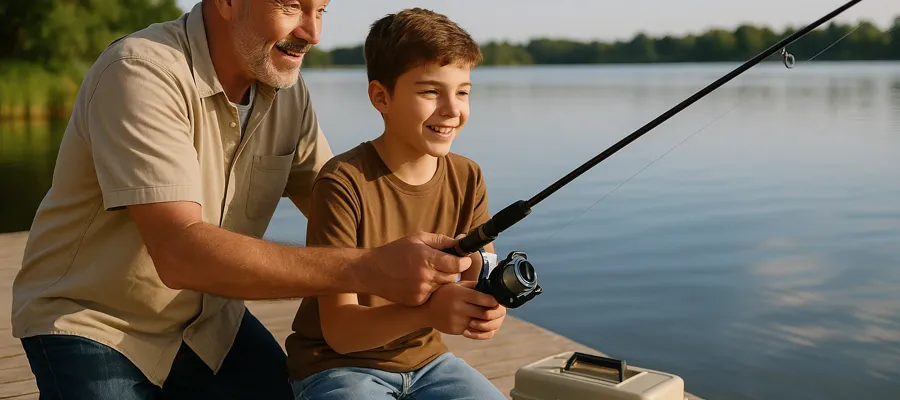
Welcome, New Angler
Fishing is one of the most rewarding outdoor pursuits you can take up — and also one of the most accessible. You don't need expensive gear, years of experience, or a boat to get started. What you do need is a little knowledge, some patience, and a willingness to learn.
This guide is written specifically for complete beginners. We'll walk you through everything you need to know to get on the water, catch your first fish, and build a foundation for a lifetime of great fishing. Work through it in order or jump to the section you need most.
1. Get Licensed First
Before you wet a line, check your local fishing license requirements. In most places, anyone over a certain age (usually 16) needs a valid fishing license. Licenses are typically sold online, at sporting goods stores, and through government fish & wildlife websites.
- Licenses are usually inexpensive — often $20–$50 for an annual freshwater license
- Some areas have free fishing days for beginners — a great way to try before you buy
- Regulations include bag limits, size limits, and gear restrictions — always read them
- Fishing without a license carries significant fines — it's not worth the risk
2. Essential Starter Gear
You don't need much to start. Here's what a typical beginner kit looks like:
Rod & Reel Combo
A medium-light spinning combo (6'–7') is the most versatile starter setup. Pre-spooled combos are great value — look for something in the $30–$70 range to start.
Fishing Line
6–10 lb monofilament is perfect for most beginner freshwater fishing. It's forgiving, easy to knot, and works in almost every situation.
Basic Tackle
Assorted hooks (sizes 6–2), split shot sinkers, a few bobbers/floats, and small swivels. A beginner tackle kit covers all of this for under $15.
Tackle Box
A small plastic tackle tray keeps your gear organized and accessible. You don't need anything fancy to start.
Line Cutters / Pliers
A small pair of fishing scissors or nail clippers for line, and a pair of pliers for removing hooks safely — essential tools.
Personal Essentials
Sunscreen, a hat, polarized sunglasses (helps you see into the water), and comfortable clothes for the weather. Don't overlook comfort.
3. How to Rig Your Line
For most beginners, a simple bobber-and-worm rig is the perfect starting point. Here's how to set it up:
- Step 1: Clip a small bobber onto the line about 18"–36" above the hook (adjust depth to match how deep the fish are).
- Step 2: Add a small split shot sinker about 6"–8" above the hook to keep the bait down.
- Step 3: Tie a size 6 or 8 hook to the end of your line using an improved clinch knot.
- Step 4: Thread a small piece of earthworm onto the hook, leaving a bit dangling.
- Step 5: Cast, watch the bobber, and wait for it to dip underwater — that's your bite signal.
The Improved Clinch Knot (Most Important Knot to Learn)
- Thread 6 inches of line through the hook eye
- Wrap the tag end around the main line 5–6 times
- Thread the tag end back through the loop near the eye
- Pass it through the big loop you just created
- Wet the knot, pull both ends tight, trim the tag end close
Practice this knot at home until it feels natural. It's the foundation of all your fishing rigging.
4. Choosing Your Bait
For freshwater beginners, live bait is almost always more effective than lures. These are your most reliable options:
- Earthworms / Nightcrawlers — The universal beginner bait. Catch bass, trout, perch, bluegill, catfish, and many more. Available at almost every bait shop.
- Powerbait / Dough Baits — Especially effective for stocked trout. Comes in floating and sinking varieties.
- Crickets — Outstanding for bluegill and other panfish, especially in warm-weather months.
- Small minnows — Work well under a bobber for bass, walleye, and larger panfish. Keep them in an aerated bucket.
- Corn kernels — A surprisingly effective and inexpensive bait for carp and sometimes trout.
5. How to Cast a Spinning Reel
- Step 1: Hold the rod with your dominant hand, keeping your index finger on the line just above the reel.
- Step 2: Flip the bail open with your other hand.
- Step 3: Hook the line with your index finger so it doesn't fall.
- Step 4: Bring the rod tip behind you to about the 2 o'clock position.
- Step 5: Swing the rod forward smoothly and release your finger from the line at about the 10 o'clock position.
- Step 6: As the lure lands, flip the bail closed and begin retrieving.
Pro tip: Start your practice casts in a park with a small rubber weight instead of a hook. Casting accuracy improves dramatically with practice — 30 minutes of backyard practice before your first trip is well worth it.
6. Where to Fish
Location is everything in fishing. Here's how to find productive spots as a beginner:
- Public piers and docks — Easy access, often in areas where fish congregate under structure. Great for beginners.
- Fishing around structure — Fish love cover: fallen trees, weed edges, bridge pilings, docks, and rock piles. Cast near (not necessarily into) structure.
- Stocked ponds and lakes — Many regions stock public waters with trout and other species regularly. Check your local fish & wildlife agency's stocking reports.
- Slow-moving rivers and stream pools — Deeper pools at bends and below riffles hold fish, especially trout.
- Inlets and outlets — Where water enters or exits a lake concentrates fish due to food and oxygen.
7. Reading the Water
The best anglers don't just fish water — they read it. Learning to identify where fish are likely to hold is a skill that improves every single outing you do.
- Look for shade — Fish seek shade to avoid predators and regulate temperature. Overhanging trees and docks are reliable holding spots.
- Follow the food — Wherever baitfish (small minnows, insects) are concentrated, predators follow. Watch for surface activity like birds diving or baitfish dimpling the surface.
- Temperature matters — Fish are cold-blooded and move to preferred temperature zones. In summer, fish deep during midday; focus on shallows at dawn and dusk.
- Wind creates current — On lakes, wind pushes surface food against a shoreline. Fish often feed more actively on windward banks.
8. Hooking and Landing Fish
When a fish bites, stay calm. Here's the basic process:
- Wait for it: With a bobber rig, wait until the float goes fully under before setting the hook — don't rush.
- Set the hook: Lift the rod tip firmly but smoothly upward. You don't need to swing hard.
- Keep tension: Maintain light pressure on the line throughout the fight. Slack line lets fish throw the hook.
- Use the rod: Let the rod bend absorb the fish's runs. Don't try to muscle fish in with the reel alone.
- Land safely: For small fish, lift them carefully by the body or lower lip. Use pliers to remove the hook. For larger fish, use a landing net.
9. Fishing Ethics & Conservation
Great anglers are great stewards of the resource. From your very first outing, build these habits:
- Always follow local bag and size limit regulations
- Handle fish gently — wet your hands before touching, minimize air exposure
- If releasing fish, revive them by holding them in the water until they swim away strongly
- Pack out all your trash, including monofilament line (it's deadly to wildlife)
- Never clean fish at public access areas — dispose of scraps properly
- Respect private property and always get permission before fishing private waters
10. Your Next Steps
The best way to improve is simply to fish. Every outing teaches you something new. But here's how to accelerate your learning:
- Read our Fishing Tips section — start with freshwater basics
- Explore the Gear & Tackle guide to understand your equipment better
- Focus on one species and one method until you've got consistent results before branching out
- Fish with more experienced anglers whenever you can — in-person mentorship is irreplaceable
- Keep a simple fishing log: date, location, weather, water conditions, what you caught and on what — it reveals patterns fast
Ready to Learn More?
Dive into our full library of tips and techniques for every type of fishing.
