

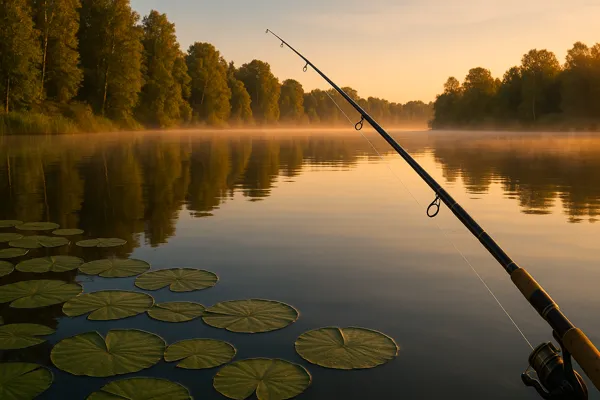
Largemouth bass are the most widely targeted freshwater game fish in North America — and for good reason. They're aggressive, powerful fighters that live in accessible lakes, ponds, and rivers across the continent. But catching them consistently takes more than luck. This guide covers the fundamentals every beginner needs to understand before their first cast.
Understanding Bass Behavior
Largemouth bass are ambush predators. They hide near structure — weeds, fallen logs, dock pilings, rock piles — and strike at prey that passes close by. Understanding this instinct is the single most important thing a beginner can learn. You're not casting randomly; you're targeting specific spots where bass feel safe and where food is likely to pass through.
Bass are also cold-blooded, meaning their activity level is heavily influenced by water temperature. The most productive fishing typically happens when water temperatures are between 60°F and 75°F. In summer, bass go deeper to find cooler water. In spring, they move shallow to spawn — this is the single best window for beginners to start catching fish.
The Best Bass Fishing Locations
Knowing where to cast is more important than knowing what lure to use. Bass consistently relate to structure and cover. Structure refers to changes in the bottom contour — drop-offs, humps, points, creek channels. Cover refers to physical objects bass hide in or around.
- Weed edges: The edge where dense aquatic vegetation meets open water is a prime ambush lane.
- Dock pilings: Especially shaded docks in summer — bass use them to escape heat and wait for prey.
- Fallen timber: Submerged logs and root wads are classic bass habitat in lakes and rivers.
- Points and humps: Underwater points that jut into a lake funnel baitfish and bass alike.
- Shallow flats in spring: During the pre-spawn and spawn (water temp 58–68°F), bass move onto flats to feed aggressively.
Essential Bass Fishing Gear
You don't need to spend a fortune to start catching bass. A solid beginner setup consists of a medium-power spinning rod (6.5–7 feet), a quality spinning reel in the 2500–3000 size, and 10–17 lb braided line with a fluorocarbon leader. This versatile combo handles the majority of bass fishing situations.
Top 5 Beginner Bass Lures
| Lure Type | Best Conditions | Retrieve Style |
|---|---|---|
| Plastic Worm (Texas Rig) | Heavy cover, warm water | Slow drag along bottom |
| Spinnerbait | Murky water, spring/fall | Steady medium retrieve |
| Crankbait | Clear water, active fish | Steady or erratic retrieve |
| Ned Rig | Clear water, finicky fish | Slow hop along bottom |
| Topwater Popper | Early morning, calm surface | Pop-pause-pop |
Timing Your Fishing Sessions
Bass feed most aggressively during low-light periods. The two to three hours after sunrise and the two hours before sunset are consistently the most productive windows throughout the season. On overcast days, bass often stay active all day. In summer, midday fishing can be slow unless you target deeper, cooler water.
Paying attention to the lunar calendar also helps — many experienced anglers report increased bass activity around new and full moons, when tidal and gravitational forces are strongest.
The "Slow Down" Rule
The single most common mistake beginners make is retrieving their lure too fast. Bass are ambush predators — they need time to see the lure, decide to strike, and move in to intercept. Slow your retrieve down significantly, especially in cold water. A plastic worm crawled slowly along the bottom will almost always outperform one ripped through the water column.
"If you think you're fishing slow enough, slow down some more. Bass will almost always find a slow-moving bait before they strike a fast one." — A common piece of wisdom shared by seasoned bass anglers.
Catch and Release Best Practices
Largemouth bass populations depend on responsible angling. If you're not keeping fish for the table, practice proper catch and release: wet your hands before handling fish, keep them in the water as much as possible, support the belly of large fish (never hold only by the lip horizontally), and release the fish gently, head-first, allowing it to swim away on its own.
With these fundamentals in place, your first bass is likely just a cast or two away. Focus on finding the right location, slow your presentation, and let the fish come to you.