

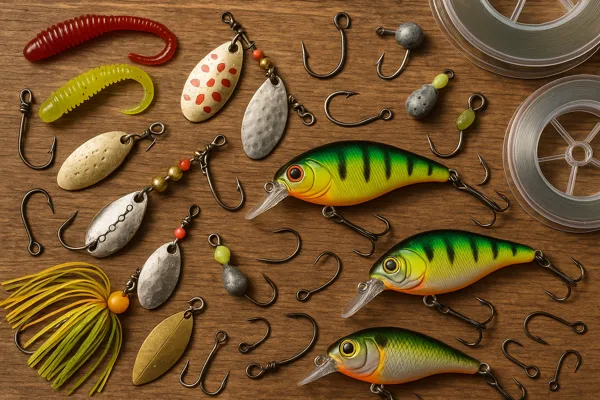
Walk into any tackle shop and you'll face an overwhelming wall of lures — spinners, soft plastics, crankbaits, jigs, topwaters, swimbaits, and more. For a beginner (and even many experienced anglers), the choice can be paralyzing. The good news: you don't need every lure in the store. Understanding the core categories and when to deploy each one will make your time on the water far more productive.
The Core Lure Categories
Every fishing lure, regardless of how fancy it looks on the package, falls into one of a handful of functional categories. Each category is designed to imitate a specific type of prey or to trigger a specific predatory response.
1. Crankbaits
Crankbaits are hard-bodied lures with a plastic lip that causes them to dive and wobble when retrieved. They are designed to imitate baitfish and are excellent search lures for covering large areas of water quickly. The depth a crankbait runs is determined by the size and angle of the lip — a longer, angled lip dives deeper.
- Shallow cranks (0–5 ft): Great for fishing over submerged grass and shallow flats in spring.
- Medium-diving cranks (5–12 ft): Ideal for targeting bass, walleye, and pike along points and drop-offs.
- Deep-diving cranks (12+ ft): Used for reaching suspended fish in summer's deeper thermoclines.
Pro tip: Let a crankbait bang into rocks and wood. The irregular deflection often triggers reaction strikes from fish that weren't actively feeding.
2. Jigs
Jigs are among the most versatile and effective lures ever designed. A jig is simply a hook with a weighted head molded onto it, usually dressed with a skirt and a soft plastic trailer. Jigs are bottom-contact lures that excel in heavy cover and cold water when fish are sluggish.
The football jig is ideal for rocky bottom; the flipping jig for punching through thick vegetation; the swim jig for swimming through sparse grass. Mastering the jig will consistently put fish in the boat year-round.
3. Soft Plastics
Soft plastic lures — worms, crawfish, creature baits, swimbaits — are the backbone of most freshwater anglers' tackle boxes. They're inexpensive, lifelike in the water, and incredibly versatile. The most common rigging methods include:
- Texas Rig: Weedless setup ideal for heavy cover — the hook point is buried in the plastic.
- Ned Rig: Small mushroom-head jig with a short piece of soft plastic — deadly for finicky fish in clear water.
- Drop Shot: Hook tied above a bottom weight, keeping the bait suspended — excellent for targeting suspended or deep fish.
- Wacky Rig: Hook through the middle of a stick worm, creating a slow, shimmying fall that bass can't resist.
4. Topwater Lures
Few things in fishing are as exciting as a surface explosion. Topwater lures create surface disturbance to attract predators from below. They work best in low-light conditions — early morning and late evening — and when fish are actively feeding near the surface.
| Topwater Style | Action | Best For |
|---|---|---|
| Popper | Spits water, gurgling sound | Bass, pike near surface |
| Walking Bait | "Walk-the-dog" side-to-side | Open water bass, stripers |
| Frog | Weedless, slides over pads | Bass in heavy vegetation |
| Prop Bait | Spinning propeller, splash | Calm, clear water bass |
5. Spinners and Spinnerbaits
Spinning blades create flash and vibration, making spinners highly effective in stained or murky water where fish rely on their lateral line to detect movement. In-line spinners (like the classic Mepps-style) are excellent for trout, pike, and panfish. Spinnerbaits — with a safety-pin frame — are semi-weedless and outstanding for bass in heavy cover.
Matching the Lure to the Conditions
The right lure depends on four key factors: water clarity, water temperature, time of year, and the fish's activity level. Here's a quick decision framework:
- Murky water: Use lures with strong vibration or bright colors — spinnerbaits, chatterbaits, and rattling crankbaits.
- Clear water: Finesse presentations work best — drop shots, ned rigs, and natural-colored crankbaits.
- Cold water (below 55°F): Slow down. Jigs, soft plastics, and drop shots retrieved slowly outperform fast-moving lures.
- Warm, active fish: Cover water fast with crankbaits, spinnerbaits, and topwaters.
Building a Starter Tackle Box
You don't need 200 lures. A well-curated selection of 15–20 lures in a few proven colors (white/chartreuse, natural shad, and green pumpkin/watermelon for soft plastics) will cover the vast majority of freshwater situations. Start with a few jigs, a Texas rig setup, two crankbaits at different depths, a spinnerbait, and one topwater. Master those before adding more to your collection.
The most expensive lure in the tackle shop won't catch fish if it's not being fished in the right place, at the right depth, with the right presentation. Focus on understanding the water first — the lures are just tools to execute your plan.