

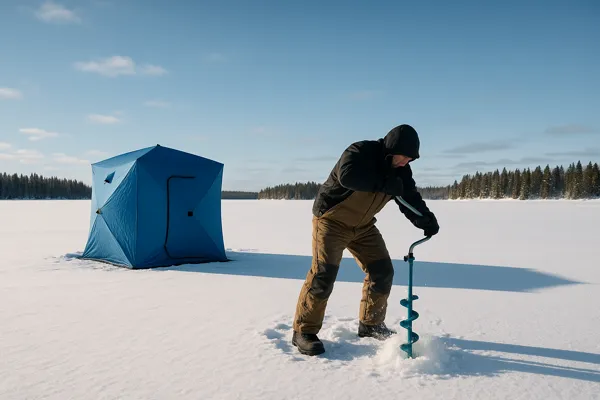
When the lakes freeze over, most anglers put away their gear until spring. But a dedicated group of ice anglers know that winter is one of the most productive seasons for targeting walleye, perch, crappie, and pike. If you've never ice fished before, this guide covers the gear you need, how to stay safe on the ice, and how to find and catch fish in the cold months.
Ice Safety: The Most Important Topic
Before discussing any gear or technique, ice safety must be addressed. Every year, anglers are injured or killed by venturing onto unsafe ice. Follow these non-negotiable guidelines:
- Minimum 4 inches of clear, solid ice for walking on foot. Never fish alone on new ice.
- 5–7 inches for a snowmobile or ATV.
- 8–12 inches for a light vehicle (verify local regulations and ice quality first).
- Always carry ice picks (self-rescue spikes) around your neck — if you fall through, they allow you to pull yourself out.
- Wear a flotation suit or ice fishing life jacket, especially early and late season.
- Test ice thickness regularly with a chisel or auger as you walk — ice varies significantly across a lake.
- Never fish on ice that appears grey, slushy, or honeycombed — these are signs of deteriorating ice.
- Tell someone where you're going and when you expect to return.
"No fish is worth your life. Check the ice, bring safety equipment, and fish with a buddy whenever possible." — Standard guidance from ice fishing safety organizations.
Essential Ice Fishing Gear
Ice Auger
An auger drills your fishing holes. Manual hand augers are affordable and perfectly adequate for beginners — an 8-inch diameter is the most versatile size, handling most fish species while not being overly difficult to drill. Power augers (gas or electric) are faster and better for drilling many holes, but they're a bigger investment.
Ice Fishing Rod and Reel
Ice fishing rods are short — typically 24 to 36 inches. Shorter rods give you more control when jigging in a small hole. A medium-light to medium action rod paired with a small spinning reel handles the majority of freshwater ice species. Spool with 4–8 lb monofilament (mono remains more flexible than braid in extreme cold, though modern ice braid is also an option).
Shelter Options
Staying warm is as important as catching fish. Your shelter options range from simple to sophisticated:
| Shelter Type | Pros | Cons |
|---|---|---|
| No shelter (tip-ups) | Minimal gear, mobile | Exposed to wind and cold |
| Pop-up flip shelter | Affordable, fast setup | Limited wind resistance |
| Hub-style portable shelter | Roomy, good wind block | Slightly heavier |
| Permanent ice house | Maximum comfort, heated | Not portable, high cost |
Electronics and Locating Fish
A flasher or fish finder is one of the most valuable investments an ice angler can make. Dropped down the hole, it shows you the bottom depth, your jig's position, and — crucially — fish moving in below your bait in real time. This feedback allows you to adjust your presentation on the fly, dramatically increasing your catch rate.
Finding Fish Under the Ice
Fish don't stop moving in winter — they just slow down. Their metabolism drops with the water temperature, so they need less food and tend to hold in specific areas. The key locations to target:
- Weed edges: Dying weeds still hold oxygen and attract small invertebrates — perch, crappie, and pike feed here.
- Basin transitions: Where the basin floor transitions from mud to harder substrate often concentrates walleye.
- Creek channels under ice: Moving water under the ice stays slightly warmer and attracts active fish.
- Mid-lake humps: Underwater high spots concentrate fish, especially at first and last ice.
Ice Fishing Presentation Basics
Ice fishing jigging is subtle work. Small, finesse presentations generally outperform aggressive ones in cold water. The basic technique: drop your jig to the bottom, reel up a few inches, and use small, gentle lifts and drops of the rod tip — 1 to 4 inches of movement. Let the bait fall back on a slack line; many strikes come on the drop.
Tipping your jig with live or fresh-dead bait — waxworms, spikes (maggots), or small minnows — dramatically increases your scent profile and strike rate. For larger species like walleye and pike, small jigging spoons and tip-up rigs with live minnows are highly effective.
Ice fishing is a unique combination of patience, preparation, and the simple satisfaction of pulling fish through a small hole in the ice while the world is frozen around you. Gear up properly, respect the ice, and one of fishing's most rewarding seasons awaits.